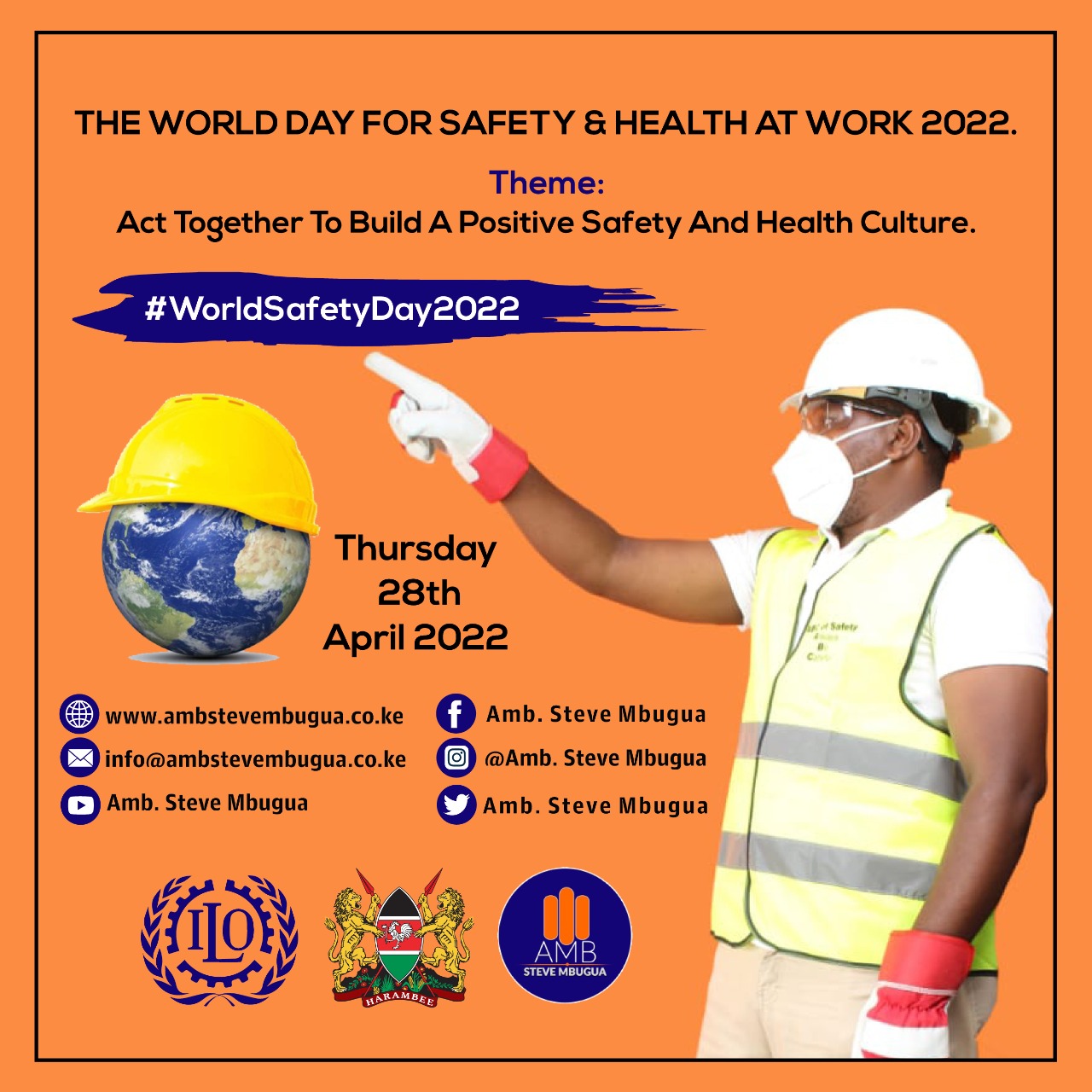
A Safety Awareness Message from Ambassador Steve Mbugua — An Ambassador of Safety
Kenya has confirmed its first imported case of Bundibugyo Ebola Virus Disease (BVD).
This is a moment for vigilance, preparedness, responsible action and accurate information — not panic.
On 6 October 2026, the Ministry of Health confirmed that a Kenyan citizen who had been living in the Democratic Republic of Congo (DRC) had tested positive for Bundibugyo Ebola Virus Disease after travelling from the DRC through Uganda to Nairobi.
The patient arrived in Nairobi on 3 October, was taken to a hospital, isolated and tested. Samples tested positive at both the National Virology Reference Laboratory and KEMRI. Despite supportive treatment, the patient sadly died. The Ministry has initiated contact tracing and other public-health measures.
According to the Ministry of Health, 28 contacts had already been identified, including family members and healthcare workers, while authorities were also tracing passengers and crew members who travelled on the same flight.
This development reminds us of a fundamental principle of safety:
PREPAREDNESS MUST COME BEFORE CRISIS.
Kenya had already been strengthening Ebola preparedness before this case was confirmed. The Ministry had activated national response systems, strengthened surveillance, trained healthcare workers, enhanced laboratory capacity and designated isolation and treatment facilities. By 6 October, the Ministry reported that almost 5,000 healthcare workers had been trained and more than 652,000 travellers had been screened.
That preparation now matters.
WHAT IS EBOLA?
Ebola Virus Disease (EVD) is a serious viral disease caused by viruses in the Ebolavirus group.
The current Kenyan case is specifically Bundibugyo virus disease, caused by Bundibugyo virus.
The virus can cause severe illness and can spread from person to person through contact with infected blood or other body fluids.
Ebola is not something to be treated casually, but neither should the public respond with fear, stigma or misinformation.
The correct response is:
KNOW → PREPARE → PREVENT → REPORT → RESPOND
HOW DOES EBOLA SPREAD?
Ebola can spread through direct contact with:
* Blood
* Vomit
* Diarrhoea
* Saliva and other body fluids
* Urine
* Sweat
* Breast milk
* Semen and other potentially infectious fluids
Transmission can occur when these fluids from an infected or recently deceased person come into contact with another person’s broken skin or mucous membranes such as the eyes, nose or mouth.
Contaminated materials and surfaces can also present a risk, particularly in healthcare and caregiving environments.
This is why infection prevention and control is absolutely critical.
Healthcare workers, caregivers, family members, burial teams and anyone handling potentially contaminated materials must use appropriate infection-control procedures and protective equipment.
WHAT ABOUT THE AIR?
One of the most important things is to separate facts from fear.
Ebola is not generally considered an airborne disease like measles or tuberculosis.
The major concern is direct contact with infected body fluids and contaminated materials.
This means we should not stigmatize people simply because they travelled from an affected area.
Instead, we should focus on risk assessment, surveillance, early identification, isolation and appropriate infection prevention and control.
SIGNS AND SYMPTOMS
Ebola can initially look like many other serious infections.
Possible symptoms include:
* Fever
* Severe weakness and fatigue
* Headache
* Muscle pain
* Chills
* Sore throat
* Vomiting
* Diarrhoea
* Abdominal pain
* Loss of appetite
* Rash
* Unexplained bleeding or bruising in some patients
* Other signs of severe illness
The Ministry reported that the confirmed Kenyan patient experienced fever, chills, intense fatigue and weakness, muscle pain, painful swallowing, sore throat and bleeding beneath the skin at injection sites.
Important: Having these symptoms does NOT automatically mean someone has Ebola. Many other illnesses can cause similar symptoms.
The important issue is symptoms + exposure/travel history + appropriate medical assessment.
THE INCUBATION PERIOD
After exposure, symptoms may take time to appear.
The incubation period for Ebola is generally 2–21 days.
Therefore, someone who has potentially been exposed may require monitoring and follow-up even when they initially feel well.
This is why contact tracing and monitoring are such important components of Ebola response.
EBOLA IN EAST AFRICA
Ebola is not a completely new threat to the East African region.
The current situation has important regional dimensions involving the Democratic Republic of Congo, Uganda and Kenya.
WHO reports that the ongoing Bundibugyo outbreak in the DRC has resulted in regional concern, while Uganda — where Bundibugyo virus was first identified in 2007 — ended its latest outbreak in August 2026. Most Ugandan cases in that outbreak were associated with imported infections from the DRC, with some subsequent local transmission among contacts and healthcare workers.
Kenya therefore cannot look at Ebola as somebody else’s problem.
Disease does not respect borders.
People travel.
Goods move.
Families cross borders.
Healthcare workers move between facilities.
Air transport connects countries within hours.
Therefore:
EAST AFRICA NEEDS REGIONAL PREPAREDNESS.
Kenya, Uganda, Tanzania, Rwanda, Burundi, South Sudan, Ethiopia, Somalia and other countries in the region must maintain strong surveillance, laboratory capacity, border health systems, emergency response teams and infection-prevention systems.
WHAT IS THE THREAT TO KENYA?
The confirmation of an imported case demonstrates that Kenya has a real risk of Ebola introduction through travel and human movement.
But an imported case does not automatically mean that Kenya has uncontrolled community transmission.
The most important question now is:
Can we identify potential contacts quickly, monitor them appropriately, detect any new cases early and prevent onward transmission?
That is where preparedness becomes lifesaving.
Kenya’s response includes contact tracing, monitoring of potentially exposed people, laboratory testing, isolation and strengthened surveillance.
WHAT DOES EBOLA PREPAREDNESS LOOK LIKE?
Preparedness is much bigger than buying PPE.
A truly prepared country, organisation, hospital, school, airport, business or community needs:
1. SURVEILLANCE
We must be able to detect unusual illness quickly.
2. EARLY REPORTING
Suspected cases must reach the appropriate health authorities quickly.
3. TRAINED PEOPLE
Healthcare workers, emergency responders, laboratory personnel, port-health teams and other frontline personnel need appropriate training.
4. ISOLATION CAPACITY
Facilities must have systems for safely separating suspected or confirmed cases.
5. PERSONAL PROTECTIVE EQUIPMENT
Appropriate PPE must be available and staff must know how to use it correctly.
6. INFECTION PREVENTION AND CONTROL
Hand hygiene, environmental cleaning, safe waste management and appropriate PPE are essential.
7. LABORATORY CAPACITY
Suspected infections require safe, reliable and timely testing.
8. CONTACT TRACING
People who may have been exposed need to be identified and appropriately monitored.
9. SAFE AND DIGNIFIED BURIAL
Because Ebola can remain transmissible after death, burial must be conducted by trained teams following appropriate safety procedures.
10. PUBLIC COMMUNICATION
People need accurate information from trusted sources.
Misinformation can spread faster than a virus.
WHAT SHOULD THE PUBLIC DO?
1. DON’T PANIC.
Panic does not protect us.
Preparedness does.
2. PRACTISE GOOD HAND HYGIENE.
Wash your hands regularly with soap and water.
Where appropriate, use an alcohol-based hand rub.
3. AVOID UNNECESSARY CONTACT WITH BODY FLUIDS.
Never handle blood, vomit, diarrhoeal matter or other potentially infectious body fluids without appropriate protection and procedures.
4. DO NOT SELF-DIAGNOSE.
Fever does not automatically mean Ebola.
If someone becomes seriously ill, particularly following relevant travel or exposure, seek medical attention promptly and disclose the travel/exposure history.
5. FOLLOW OFFICIAL HEALTH GUIDANCE.
Listen to the Ministry of Health, county health authorities and other recognised public-health agencies.
6. DO NOT STIGMATIZE.
A person is not a virus.
A traveller is not automatically infected.
A healthcare worker is not automatically infected.
We must protect people while protecting ourselves.
7. DO NOT HANDLE A SUSPECTED PATIENT YOURSELF.
If Ebola is suspected, contact the appropriate health authorities and follow professional instructions rather than attempting to manage the situation through informal care.
EMERGENCY ACTION: WHAT SHOULD YOU DO IF EBOLA IS SUSPECTED?
STOP.
Do not rush into unnecessary physical contact.
ISOLATE — SAFELY.
Keep unnecessary people away from the potentially ill person while waiting for professional medical guidance.
PROTECT.
Do not touch blood or other body fluids without appropriate PPE and training.
REPORT.
Contact the appropriate health/medical response system immediately.
PROVIDE INFORMATION.
Tell healthcare professionals about:
Recent travel
Possible contact with an Ebola patient
Contact with body fluids
Attendance at a healthcare facility where Ebola exposure may have occurred
Relevant symptoms and when they began
FOLLOW INSTRUCTIONS.
Do not transport or move a suspected case unnecessarily unless directed by appropriate medical authorities.
The goal is to prevent one suspected case from becoming many cases.
PPE IS PART OF PREPAREDNESS — BUT PPE ALONE IS NOT ENOUGH
Personal Protective Equipment can include items such as appropriate:
* Gloves
* Protective gowns/coveralls
* Eye/face protection
* Masks/respiratory protection where indicated by the risk assessment
* Protective footwear/boots
* Aprons and other protective barriers as required
But there is an important safety lesson:
PPE is only effective when the correct equipment is selected, available, fitted and used correctly — including safe donning and doffing.
Improper removal of contaminated PPE can itself create an exposure risk.
Therefore, Ebola preparedness requires equipment + training + procedures + supervision + practice.
EBOLA PREPAREDNESS FOR BUSINESSES AND INSTITUTIONS
Every organisation should ask:
If a person with a serious infectious disease walked through our doors tomorrow, would we know what to do?
Businesses, schools, churches, hotels, transport companies, factories, hospitals and other institutions should consider:
✓ Emergency response plans
✓ Infection prevention procedures
✓ Hand hygiene stations
✓ Appropriate PPE
✓ First aid and emergency response training
✓ Cleaning and disinfection procedures
✓ Waste-management arrangements
✓ Communication protocols
✓ Staff awareness
✓ Referral and escalation procedures
✓ Business continuity planning
Preparedness should not begin after the first suspected case walks through your door.
EBOLA SAFETY EQUIPMENT IN KENYA
Preparedness also means ensuring that appropriate safety and infection-control equipment can be accessed when needed.
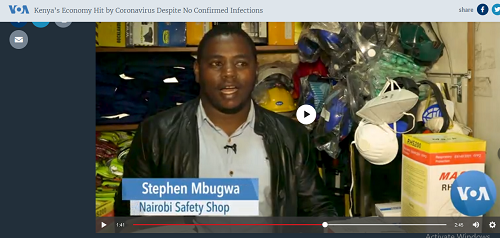
Nairobi Safety Shop provides safety, health, first-aid and protective equipment, and Ebola preparedness safety equipment is available through Nairobi Safety Shop branches in Kenya.
For organisations that need to strengthen their preparedness, the message is simple:
Don’t wait for an emergency to discover that you are not prepared.
Assess your risks.
Identify your equipment needs.
Train your people.
Develop your emergency procedures.
And keep your preparedness systems ready.
A MESSAGE TO HEALTHCARE WORKERS
To our doctors, nurses, clinical officers, laboratory professionals, port-health officers, emergency responders, cleaners, ambulance teams and other frontline workers:
You are part of our first line of defence.
Your safety matters.
Use the correct infection-prevention procedures.
Use PPE appropriately.
Follow established protocols.
Report exposures promptly.
Do not take unnecessary risks.
And remember:
A safety culture protects both the patient and the person providing care.
A MESSAGE TO THE PUBLIC
We must be vigilant without becoming fearful.
We must be informed without becoming alarmists.
We must prepare without spreading misinformation.
We must respond without stigmatizing.
And we must trust science, trained professionals and official public-health guidance.
Kenya has systems, trained personnel, laboratories, surveillance mechanisms and emergency-response structures that have been strengthened in preparation for this threat. The Ministry has also urged the public to remain calm, practise hand hygiene and seek care through recognised health facilities when unwell.
MY MESSAGE AS AN AMBASSADOR OF SAFETY
I have always believed that:
SAFETY SHOULD BE A LIFESTYLE, NOT JUST A POLICY.
Ebola reminds us why.
Safety is not about waiting for something to happen and then reacting.
Safety is about anticipating the hazard, assessing the risk, preparing people, providing resources and building systems that reduce harm.
The greatest emergency response is the one we prepare for before the emergency arrives.
Let us therefore make Ebola preparedness part of a broader culture of:
AWARENESS.
PREVENTION.
PREPAREDNESS.
EARLY DETECTION.
RAPID RESPONSE.
RESPONSIBILITY.
Let us protect ourselves.
Let us protect our families.
Let us protect our healthcare workers.
Let us protect our communities.
Let us protect Kenya.
And let us work together with our East African neighbours to strengthen regional health security.
DON’T PANIC.
DON’T IGNORE THE THREAT.
DON’T SPREAD MISINFORMATION.
PREPARE. PREVENT. REPORT. RESPOND.
Safety is everyone’s responsibility.
I am Ambassador Steve Mbugua — An Ambassador of Safety.
Helping in the building of a Building a culture of Safety.
#EbolaKenya #Ebola #Bundibugyo #EbolaVirusDisease #Kenya #EastAfrica #PublicHealth #HealthSafety #InfectionPrevention #DiseasePrevention #EmergencyPreparedness #EmergencyResponse #PPE #FirstAid #SafetyCulture #HealthcareSafety #WorkplaceSafety #CommunitySafety #AmbSteveMbugua #AmbassadorOfSafety #NairobiSafetyShop